

Automation & AI for all w/Antti Karjalainen
In today’s episode of the Masters of Automation podcast, the host Alp Uguray speaks with Antti Karjalainen, the founder of Robocorp, a Python-based open-source RPA (Robotic-Process-Automation) platform. Antti shares his story about what led him to automation, why he chose to open-source his product, the benefits of open-source, such as collaboration and innovation, and how it aligns with Robocorp's mission to make automation more accessible. We talked about the Robocorp community, managing remote teams, integration of generative AI and RPA, as well as the ethics of AI.
Our conversation then shifts toward the future of the industry, and Antti shares his insights on how he thinks the industry will evolve. He talks about integrating ChatGPT-like solutions within the product stack for automatic code generation and the challenges that come with it. The ability to integrate different solutions and providers within the core-RPA automation stack allows them to be more flexible and focus on the core automation promise. Being open-sources and Python-based helps with that integration as well.
We also discuss the industries that are the most and the least resistant to change and automation based on their exposure. The podcast ends with a discussion on managing a remote team. Antti shares his experience of running a fully remote team and the challenges and benefits that come with it. He talks about how a remote model creates equal opportunities for people from all over the world to participate fully in the company and get ahead in their careers.
This episode provides insights into the world of automation and its impact on businesses and employees. Antti's experiences offer valuable lessons for entrepreneurs, startups, and anyone interested in automation and AI.
Here are some of the questions we discussed:
What inspired you to delve into the world of automation and RPA? Was there a particular problem or challenge that motivated you to build solutions for it?
As the creator of an open-source RPA platform, how do you balance the needs of both developers and business users within your community? Are there any challenges in catering to both groups?
The field of automation and AI is constantly evolving. What exciting developments do you see on the horizon for the industry, and how do you plan to keep up with these changes?
In your experience, which industries have been the most resistant to change and automation? How can we overcome this resistance and help businesses see the value in adopting these technologies?
With the rise of remote work, how have you managed to build and maintain a successful remote team? What strategies have worked well for you, and what challenges have you faced?

The Future of Low Code AI w/Jonathon Reilly
In this episode, we're joined by Jonathan O'Reilly, the Co-Founder and COO of Akkio. With a background in operations, product, and marketing at Sonos and Markforged, Jonathan brings valuable insights to the table, particularly in the Low Code AI space and with his vast experience in product management and experiencing companies like Sonos and Markforged scale from 0 to 1 and 100.
Jon’s personal story in going into the entrepreneurship and embarking on a journey within the AI and product space is an inspiring one. We discussed about Akkio, a Low Code AI start up that democratize access to ML models and allow integrating them in business processes. Jonathan also shared compelling insights on the integration of Low Code AI with robotic process automation software, highlighting the potential for these two technologies to work together to streamline and automate business processes.
We also discussed the challenges and opportunities in building a machine learning platform for all users by emphasizin the importance of an agnostic perspective and the ability to integrate generative AI algorithms like OpenAI to enhance the platform's capabilities.
Throughout our conversation, Jonathan touched on the ethical considerations surrounding the use of technology within AI and the responsibility of technology companies to ensure their products are being used for good. He also provided valuable advice on how to approach building high performance teams in a beneficial culture for a technology startup.
If you're interested in entrepreneurship, AI, and the technology space, this is an episode you won't want to miss. Tune in to hear from an experienced leader in the industry!
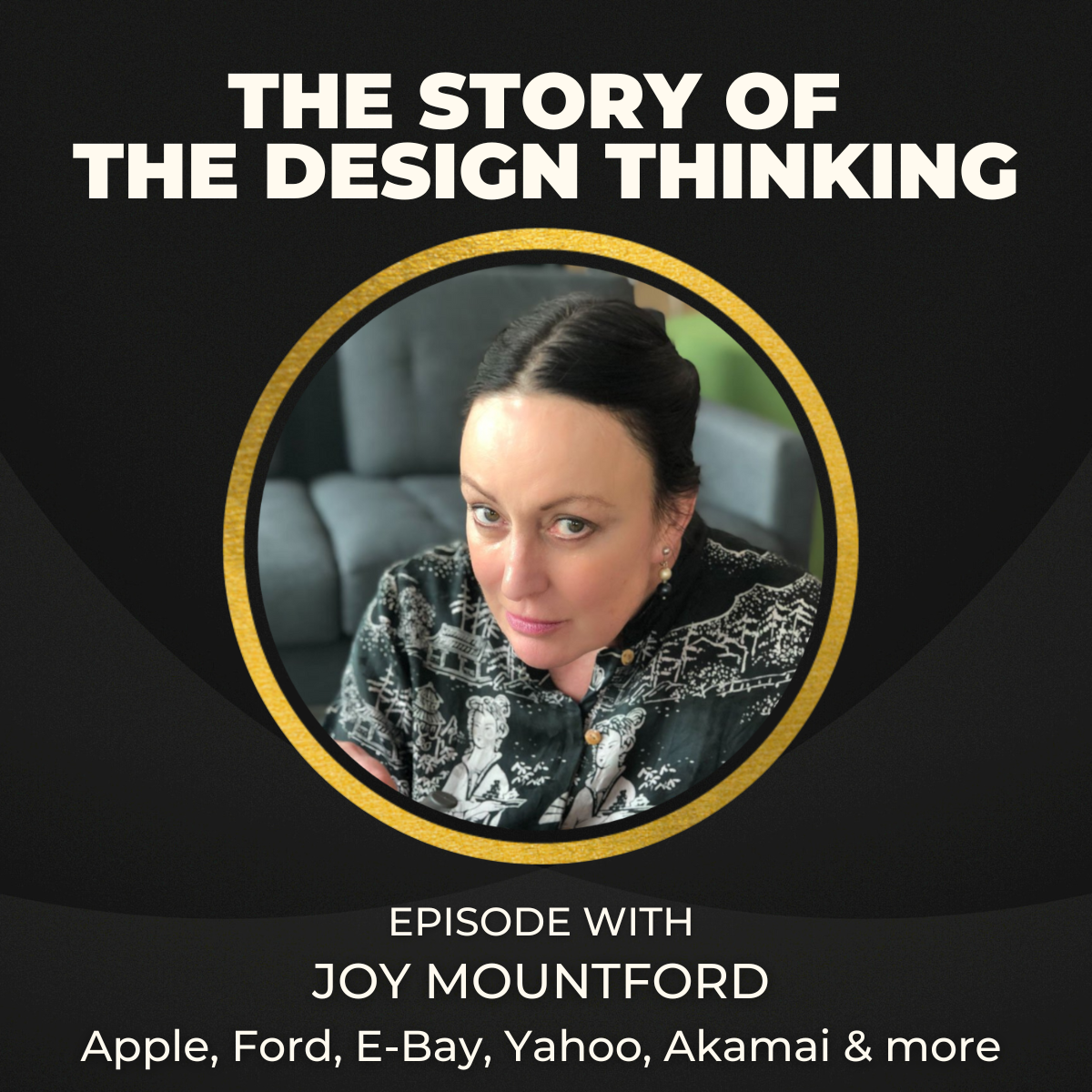
The story of the Design Thinking w/Joy Mountford
Joy Mountford is an internationally recognized leader in design, particularly human-computer interface, user experience and interaction design. She has built and led world-class design and innovation teams at Apple, Ford Motors, Akamai, Yahoo, and Interval Research. She has designed interfaces for a wide variety of systems including airplane cockpits, computers, the web, consumer electronics, musical instruments, and toys. She is inventor on over 28 key patents, granted in multimedia and human computer interaction. She created the International University Design Expo, which has touched the lives of thousands of design students for more than 20 years. She has given invited presentations at the top conferences in the field including ACM SIGCHI, IDCA, EG, and TED. She receivedWomen in Leadership Award in 2019 and received the SIGCHI Life-Time Practice Award and elected to the CHI Academy in 2012. In 2021 she contributed one of the first 3 invited transcripts covering her life works archived for the Babbage Institute, 2021.
“Joy is a founder of the intellectual and practical elite of design, a design legend" John Maeda – executive, designer, and technologist
"Joy is one of 1000 most creative individuals in U.S." Harry Marks, co-creator of TED conferences
As a pioneer of your field, how did your journey begin that led you to explore the human-computer interface? What led you to explore this field?
As the builders of the future, we are told that what we invest our time in today creates what's next for the children of tomorrow. What is the number 1 thing that today's design thinkers think about differently, and what are some things that may lead to bad experiences?
This is more of an open-ended question. As robots and software continue to interact with humans, such as pizza shops that automatically create pizza, restaurants without servers, self-driving cars, and pilots, human-to-human interaction is replaced for efficiency, consistency, and less interactivity. As humanity continues to find ways to boost Customer Experience (CX) with automation, what's the future that's waiting for us? Do people want consistency and efficiency over interactivity at all costs? And how can the young generations shape the future of work for a better experience for all? What are your thoughts?
Optimism and honesty lead to positive outcomes. Similarly, the purpose and the design of a product don’t mean that the product, when adopted, will be used for the same reasons that it’s designed for; hence you can point to the many stories revolving around Facebook or cup to filter boiled pasta water, what are some of your strategies to collect constructive feedback?
One of the most exciting aspects of predicting the future is that we always think and forecast what will happen but do not focus on what won’t happen. What won’t happen depends on what the innovative and entrepreneurial minds choose not to do in the next few years and where the people do not want change to happen. Given that the world is investing a lot of time and money into the metaverse, it opens new doors for Human and Computer interactivity. New user controls and new ways to experience the world of computers. What are your thoughts on this, particularly around a future where everyone is wearing a helmet and sitting on a couch can be both bright and dark?